Fire Safety Toolkit Essentials: How to Ensure Whole-Home Coverage
Most of us already rely on toolkits to stay prepared — from travel kits and first-aid supplies to roadside emergency gear. A complete home fire safety toolkit works the same way, bringing together the right tools so you’re ready when something unexpected happens.
Fires can evolve quickly and unpredictably, which building a whole-home detection system takes more than a single smoke alarm. When you have a fire safety toolkit of smoke alarms, carbon monoxide alarms, fire extinguishers and other safety accessories in place, you’re already well on your way.
Even if your home feels reasonably covered, it’s the critical gaps left by partial detection that are important to pay attention to. In situations where a fire begins while you’re asleep or becomes life-threatening in just a couple of minutes, a layered safety approach is essential.
That’s the thinking behind the Kidde approach to home fire safety. Building a fire safety toolkit for your home and taking the time to create and practice a home escape plan helps ensure you’re prepared at every stage of an emergency, from early detection to getting everyone out safely.1
Why a complete home fire safety toolkit matters
Modern homes are filled with everyday conveniences that also introduce fire risk. Cooking equipment, heating systems, electrical devices, charging batteries and stored fuels are essential to how we live, but also key players in how fires start. It’s simple, everyday human oversights that cause many fires — and there’s no way to avoid them entirely, because we’re all human.
A complete home fire safety toolkit is an added layer that helps protect you from you. Having only one device, or equipment that isn’t properly placed or maintained, may not provide enough time or warning in a real emergency. A complete fire safety toolkit ensures your home is better equipped to handle different scenarios and helps protect what matters most.
What to put in a fire safety kit
A fire safety toolkit is all about being ready at every stage of an emergency — from early warning alerts, to slowing a fire, to getting everyone out safely. Building a fire safety kit for your home means thinking through your space and risks, then choosing the right mix of alarms, suppression tools and escape equipment.
What alarms and detection equipment do I need?
Every fire safety toolkit for the home should include a few essential alarms.
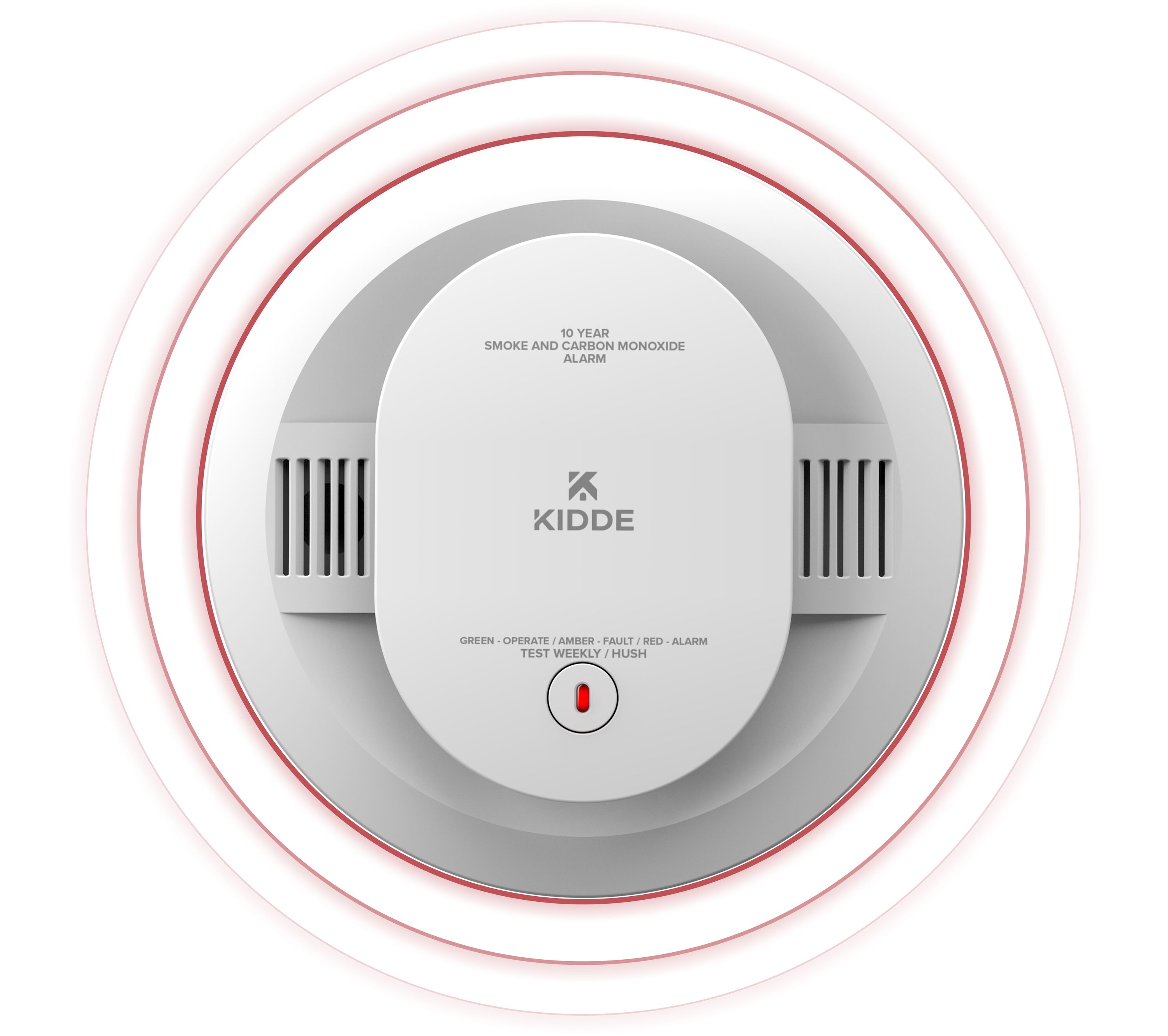
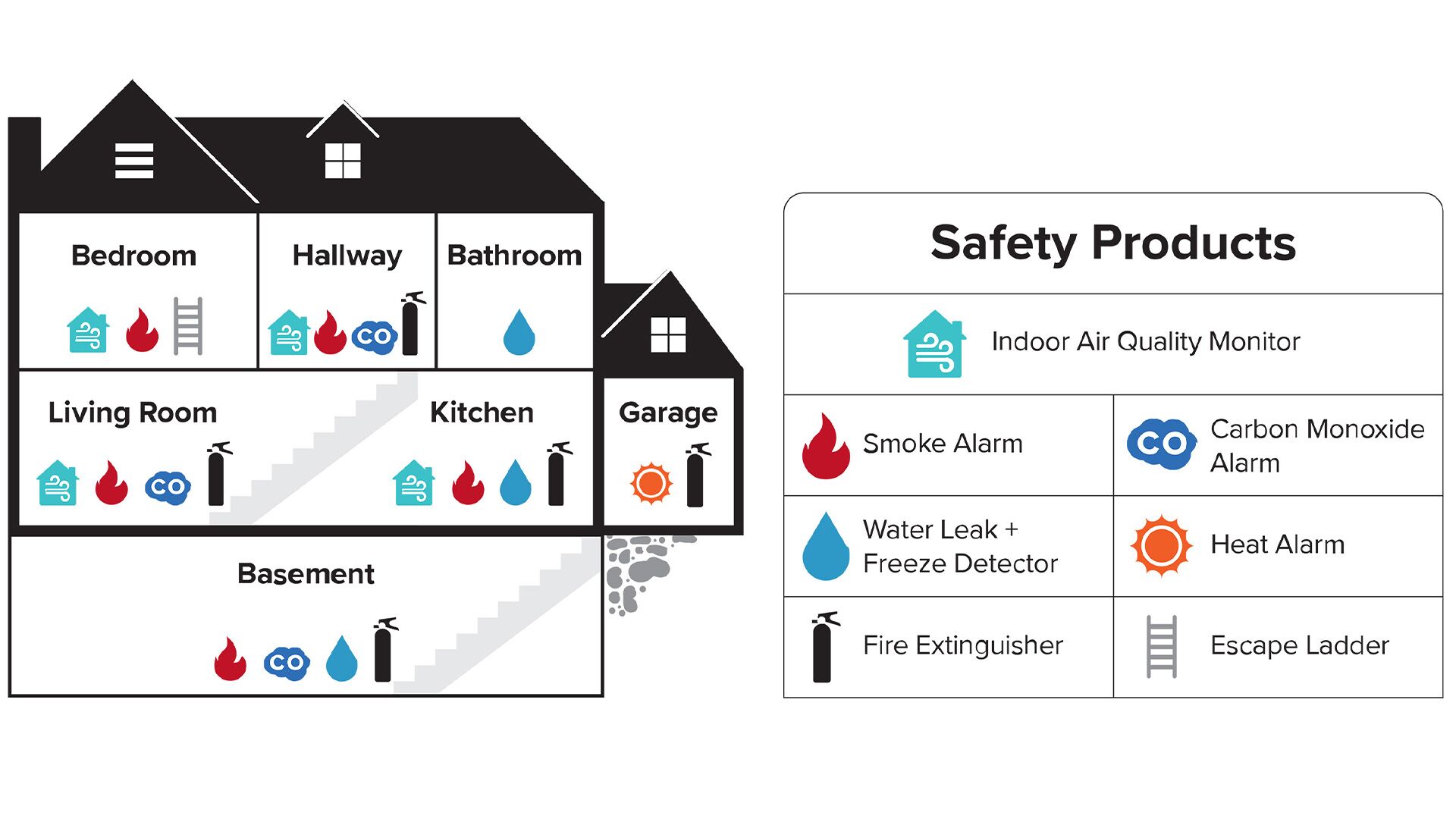
- Smoke alarms installed on every level of the home, inside bedrooms and outside sleeping areas. Choosing interconnected alarms helps ensure everyone is alerted, even if smoke is detected in an area they aren’t currently in. Units should be tested monthly and replaced every every 5-10 years.
- Carbon monoxide alarms installed on every level of the home and outside sleeping areas, even in homes without natural gas. Most units should be replaced every 7–10 years, depending on the model.
- Combination smoke and carbon monoxide alarms provide coverage for both risks in a single device, which can simplify placement, testing and maintenance.
- Heat or gas detectors used in areas where smoke alarms may not be appropriate, such as garages or near certain fuel-burning equipment.
- Water leak and freeze detectors placed near appliances, water heaters and plumbing to help identify issues early and prevent secondary damage.
What fire suppressants should I include?
Fire suppression tools are meant to help control small, contained fires and support safe evacuation. However, these tools do not replace emergency response.
- Fire extinguishers placed in key areas such as the kitchen, garage, laundry area and on each level of the home. Household members should know how to use them properly by following the PASS method (Pull the pin, Aim at the base of the fire, Squeeze the handle, Sweep side-to-side).
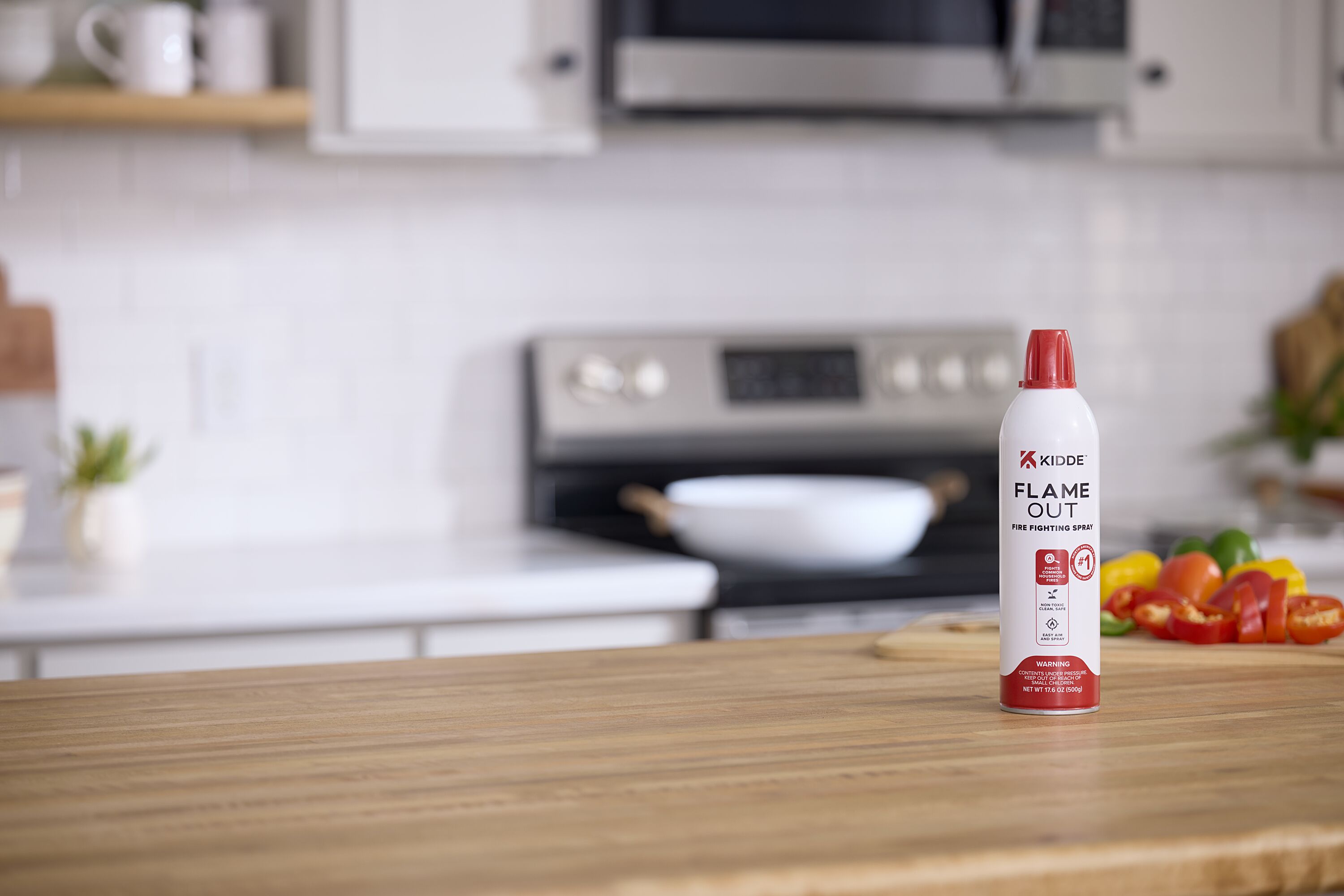
- Fire fighting sprays designed for quick response to small fires, easy to use and commonly kept in kitchens, laundry rooms, garages, bedrooms and near fireplaces or wood-burning stoves.
Optional sprinkler systems that automatically suppress fires and are more commonly found in condos or multi-family housing. These systems are typically installed, tested and maintained by building management.
What fire escape and emergency equipment do I need?
Clear escape options and emergency storage help reduce confusion during an emergency and support a faster, safer evacuation.
- Escape ladders or upper-level bedrooms that provide an additional exit if stairways or hallways are blocked. It’s important to practice deploying and using them ahead of time.
- Fireproof boxes or safes used to help protect important documents, digital backups and small valuables, making recovery easier after an emergency.
Looking after your home’s fire safety shouldn’t be anxiety-inducing or stressful. When you’ve put detection systems in place, you can get back to enjoying your home with the confidence that you’re helping to protect what matters most.
Related Products
Related Articles
Tips on How to Use a Fire Extinguisher
Stand 5 feet away from the fire and follow the four-step PASS procedure recommended by the National Fire Protection Association.
Pet Fire Safety
Protecting your family also means protecting your pets. Learn how to practice pet fire safety in your home.
Where Does Carbon Monoxide Actually Come From?
Carbon monoxide (CO) is like that shady movie villain — lurking around when you least expect it. But where does it come from in the first place? It’s produced during fuel-burning processes, and there are several culprits that could lead to a dangerous buildup in your home.
Carbon Monoxide Comprehensive Guide
Learn more about carbon monoxide and find commonly asked questions about using CO alarms to help protect against this dangerous and potentially deadly gas.
Carbon Monoxide Dangers & Risks
Carbon Monoxide Dangers, carbon monoxide poisoning, carbon monoxide poisoning symptoms, carbon minoxide, carbon monixide, carbonmonoxide
1 29% faster average smoke detection based on internal testing of smoldering wood fires for Kidde 9th Edition vs. leading competitor 8th Edition products.
2 Note: Do not place alarms within 6 ft of appliances. These are general recommendations only, as every home is different. See specific User Guides (Smoke, CO, Ladder, etc.) for more detailed location information.