How to Make & Practice a Family Fire Escape Plan
Put your plan into action with Kidde’s Augmented Reality (AR) Fire Safety Tool.
Many people think they’ll have plenty of time to escape a house fire. The reality is that you may have just 2 minutes or less¹ once an alarm sounds, so every second counts. Yet only 26% of American families have actually developed and practiced a home fire escape plan.2
The good news is that preparing doesn’t have to be complicated. Kidde is here to help with tools and resources — like our new Augmented Reality (AR) Fire Safety Tool — that your family can use to create a plan, practice it regularly and feel more prepared to act in an emergency.
Start by Equipping Your Home
First, make sure your home has properly installed smoke alarms that are working and ready to alert you in an emergency. Smoke alarms should be installed in every bedroom, outside each sleeping area and on every level of your home. And consider interconnected alarms, so when one alarm sounds, they all do.3
Whatever alarms you choose, test them monthly and replace batteries as recommended by the manufacturer — or better yet, consider smoke alarms with 10-year sealed batteries.4

Create an escape plan with your family
Begin by downloading Kidde’s Fire Escape Planning Worksheet and completing it as a family. It’s a great starting point for getting everyone involved and on the same page.
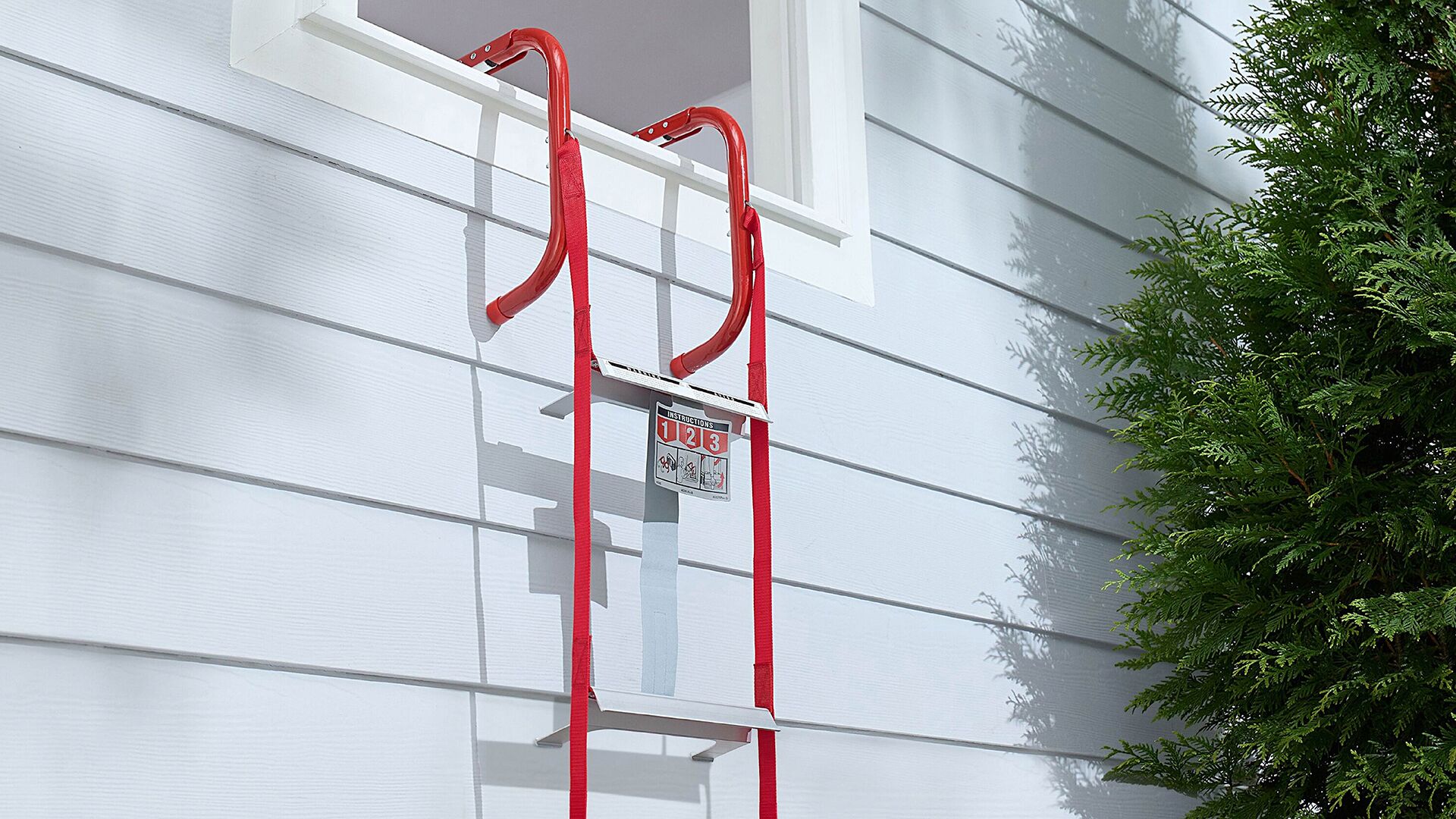
The second way out is often a window
Bring everyone together to walk through the house and identify two ways out of every room. Make sure escape routes are clear and that doors and windows can be easily opened. For bedrooms on an upper floor, consider keeping an escape ladder near the window and ensure everyone knows how to use it.
Choose a meeting place outside your home
Select a location that’s a safe distance away, such as a neighbor’s house or a streetside mailbox and ensure everyone knows to go there in an emergency. Your house number should also be clearly visible from the street so emergency responders can find you quickly.
Include everyone in your plans
If your household includes children, older adults or family members with mobility challenges, designate someone to assist them during an emergency — and choose a backup helper in case that person isn’t available.
Don’t forget houseguests either. Make sure visitors know your escape routes and where your family meeting place is.
Remember your fur-ever friends
Pets are part of the family, so make them part of your fire escape plan whenever possible. Help them get used to the sound of your alarms, so they’re less likely to instinctively hide during an emergency.
Keep leashes, carriers and pet supplies near an exit where they’re easy to access. You can also place a pet rescue decal on your front door to let firefighters know how many animals may be inside.
Bring Your Plan to Life with Kidde’s AR Tool
Once you’ve mapped out your escape plan, it’s time to put it into practice. Kidde’s free Prepare. Plan. Practice. Augmented Reality (AR) Fire Safety Tool is an immersive, personalized experience that helps your family learn about fire & carbon monoxide safety and rehearse what to do before an emergency happens.
Using a smartphone or tablet, your family can explore three interactive modes:
Try the Prepare. Plan. Practice. AR Tool
It’s free to access from any smartphone or tablet with internet access — no downloads or purchases required.
Practice Your Plan Regularly
Once your plan is in place, practice it at least twice a year — both during the day and at night — so everyone knows exactly what to do and where to go when an alarm sounds.
Practice using both ways out, getting outside quickly and meeting at your designated outdoor place. And once you’re out, stay out. Never go back inside for any reason.
Using Kidde’s AR tool as part of your regular fire safety routine can help your family go beyond simply talking about what to do. By practicing together, fire safety becomes more than something you think about once a year — it becomes something your family is familiar with before you ever need to put your plan into action.
Be Ready When Moments Matter
Making fire safety a priority starts with knowing what to do if an alarm sounds. And Kidde has the tools and resources designed to help give your family confidence in an emergency.
Because having a plan is important, but practicing it can help make every second count.
Frequently Asked Questions About Making an Escape Plan
Related Products
Related Articles
Why Interconnected Alarms Matter More Than You Think
Interconnected alarms are exactly what they sound like: smoke alarms or combination smoke & carbon monoxide (CO) alarms that link together — so when one detects a problem, they all sound. Instead of each alarm working solo, they're kind of like a home safety super team.
Tiny Habits that Could Turn Into Big Flames
Home is the best thing ever. Nothing beats that feeling of walking in the door, throwing on your comfiest sweats and collapsing on the couch. But on what feels like any old day, those same comforts could quietly spark a fire.
Time to Replace Your Alarms
Smoke and carbon monoxide (CO) alarms have an expiration date. Smoke sensors lose sensitivity over time, which means they might not respond as quickly — or sometimes, at all.
1 Source: National Fire Protection Association (NFPA), Plan Your Home Fire Escape (2017).
2 Source: American Red Cross, Fire Escape Planning Fact Sheet (2025).
3 Different models offer different interconnection options and requirements. Check the User Guide for more info.
4 10-year limited warranty (battery included). Constant exposures to high or low temperatures or high humidity may reduce battery life.