What Causes Carbon Monoxide in the Home? Sources, Risks, and Safety Tips
Carbon monoxide can be difficult to picture.
It almost sounds like a riddle: What can’t you see, smell or taste, yet can still be present in a home?
This gas, often called the “invisible killer,” forms when common fuels like natural gas, wood or gasoline don’t burn completely.1 Because its sources are so familiar, carbon monoxide can build up without obvious warning. In the U.S., accidental, non-fire-related carbon monoxide poisoning causes more than 150 deaths each year.2
What causes carbon monoxide?
The answer usually starts with the systems we rely on every day to heat our homes, cook meals and power vehicles and appliances. At the same time, many families don’t have adequate carbon monoxide detection in place, making it easier for carbon monoxide to go unnoticed in the home.
The good news is that carbon monoxide doesn’t have to be a mystery. Modern carbon monoxide alarms are highly sensitive and effective, and when you understand where CO comes from and how to respond, it’s much easier to reduce risk at home.
For decades, Kidde has helped families make sense of risks that aren’t always easy to see. Below, we break down what creates carbon monoxide in the home and how small, practical steps can help keep your household prepared.
Key takeaways
- Carbon monoxide in the home comes from everyday fuel-burning systems, especially when ventilation or maintenance falls short.
- Some of the biggest carbon monoxide causes are easy to overlook, including blocked vents, aging appliances and weather-related airflow issues.
- Layered prevention and early detection are essential, combining safe habits, routine maintenance and CO alarms placed throughout the home.
What causes carbon monoxide in the home?
Carbon monoxide is produced whenever fuels don’t burn completely. Sources of carbon monoxide in the home typically include any appliance, system or equipment that burns fuel. When those systems don’t get enough fresh air or can’t vent exhaust gases outside as intended, carbon monoxide can build up indoors. Poor maintenance or using equipment in unintended ways can also increase the risk.
Common causes of carbon monoxide include:
- Fuel-burning appliances - Furnaces, boilers, water heaters and clothes dryers can produce carbon monoxide if they malfunction, become blocked or aren’t properly vented.
- Cooking equipment - Gas stoves, ovens and ranges release carbon monoxide as a byproduct of combustion, particularly when used frequently or without adequate ventilation.
- Fireplaces and wood-burning stoves - Chimneys or flues that are blocked, damaged or poorly maintained can cause carbon monoxide to build up indoors instead of venting safely outside.
- Portable generators and fuel-powered tools/lawn equipment - Gas-powered generators, lawn equipment or tools produce high levels of carbon monoxide and should never be used indoors or near open windows, doors or vents.
- Vehicles in attached garages - Even a running or recently turned-off vehicle can release carbon monoxide that seeps into the home, especially when garage doors or interior doors are left open.
Overlooked causes of carbon monoxide
When people think about what causes carbon monoxide, they often focus on major appliances or obvious fuel sources. But carbon monoxide can also build up due to less visible issues, especially when airflow, ventilation or equipment condition is compromised. And make sure to pay special attention in the winter.
Commonly overlooked carbon monoxide causes include:
- Blocked or damaged vents and flues: Snow, debris, nests or structural damage can prevent exhaust gases from venting outdoors.
- Using grills or generators indoors or near openings: Even when placed near openings, these devices can release dangerous levels of carbon monoxide into living spaces.
- Poorly maintained or aging appliances: As appliances wear down, burners and internal components may not function efficiently, increasing the chance of incomplete combustion.
- Weather-related ventilation issues: Heavy snow, ice or high winds can interfere with exhaust systems or create pressure changes that push carbon monoxide back into the home.
Prevention and risk management tips
Because carbon monoxide can’t be seen or smelled, prevention and early detection are especially important. A few consistent habits, combined with the right Kidde alarms, can go a long way toward helping protect your home and providing peace of mind.
Prevention:
Preventing carbon monoxide buildup starts with keeping fuel-burning systems in good working order and using equipment as intended. Schedule annual inspections for fuel-burning appliances and systems, including furnaces, water heaters, fireplaces and chimneys. Regularly clear blockages of debris or snow that may inhibit gas from venting safely. Additionally, make sure to use equipment properly:
- Never use gas ranges, grills or charcoal grills for heating, and don’t operate unvented space heaters in enclosed spaces.
- Never run vehicles inside garages, even with the door open.
- Operate generators and fuel-powered tools outdoors and far from windows, doors and vents.
- Keep ventilation pathways, such as chimneys, vents and fireplace dampers, open and clear of debris.
Carbon Monoxide Detection:
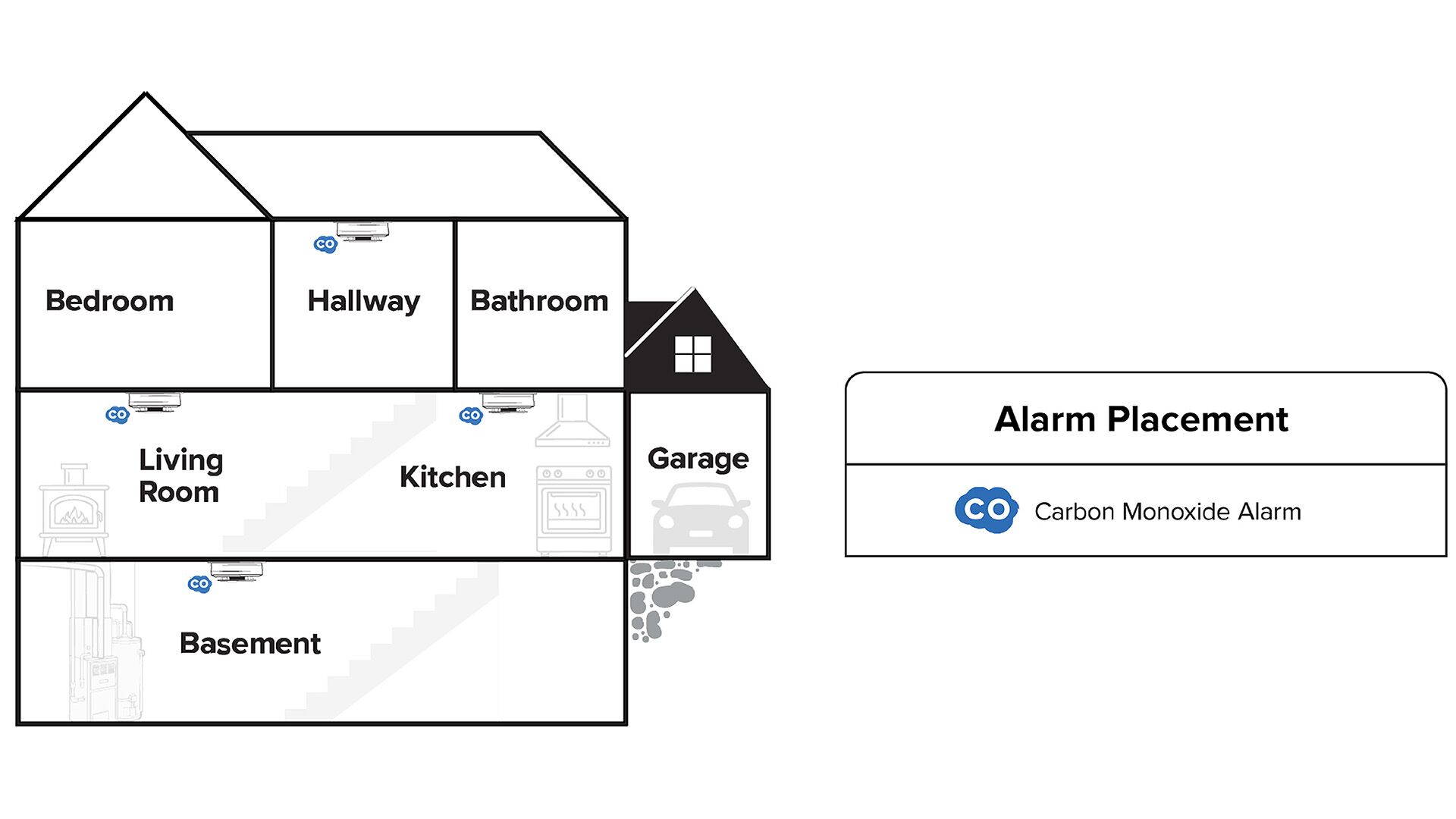
Even with strong prevention habits, detection is a critical safety layer. Carbon monoxide alarms provide early warning if gas levels rise. Install carbon monoxide alarms on every level of the home and near sleeping areas. Make sure to place alarms in or near attached garages, where CO exposure risk is higher.
For added security, consider combination smoke and CO alarms, which can simplify installation and ongoing maintenance in shared spaces. Choosing the right alarm for your needs — and placing it correctly throughout the home — helps ensure alerts are timely, accurate and effective. Once the alarms are in place, test them monthly and replace batteries or units according to manufacturer guidelines.
What to do if carbon monoxide in the home is suspected
If a carbon monoxide alarm sounds or if you suspect carbon monoxide exposure, it’s important to act quickly and deliberately.
These steps help protect everyone in the home while the situation is assessed.
1. Get everyone outside to fresh air immediately. Move all occupants, including pets, outside to fresh air as soon as possible. While opening doors and windows can help reduce exposure, your main focus should be getting outside of the house. Additionally, open windows inhibit emergency responders from getting accurate readings of leaks inside the home.
2. Call emergency services. Once outside, call emergency services or your local fire department to report the alarm or suspected carbon monoxide issue. They can assess the situation and determine whether elevated CO levels are present.
3. Do not re-enter until the issue is resolved. Do not go back inside until emergency responders or professionals confirm it’s safe to do so. Any appliances involved should be repaired, serviced or replaced as needed before normal use resumes.
Related Articles
Where Does Carbon Monoxide Actually Come From?
Carbon monoxide (CO) is like that shady movie villain — lurking around when you least expect it. But where does it come from in the first place? It’s produced during fuel-burning processes, and there are several culprits that could lead to a dangerous buildup in your home.
Carbon Monoxide Dangers & Risks
Carbon Monoxide Dangers, carbon monoxide poisoning, carbon monoxide poisoning symptoms, carbon minoxide, carbon monixide, carbonmonoxide
Pet Fire Safety
Protecting your family also means protecting your pets. Learn how to practice pet fire safety in your home.
Carbon Monoxide Comprehensive Guide
Learn more about carbon monoxide and find commonly asked questions about using CO alarms to help protect against this dangerous and potentially deadly gas.