Carbon Monoxide Safety for Pets
Get to know the signs & sources.
Symptoms of CO poisoning in pets aren’t always specific and could easily be mistaken for other illnesses. And pets can be susceptible to even low levels of carbon monoxide exposure,* so it’s important to have working CO alarms in your home and know the warning signs.
Sources of Carbon Monoxide
Carbon monoxide (CO) is a colorless, odorless, and tasteless gas that is created by any fuel-burning appliance.
When power outages occur during emergencies such as hurricanes or winter storms, the use of alternative sources of fuel or electricity for heating, cooling, or cooking can cause CO to build up in a home, garage, or camper and poison the people and animals inside.
Common sources
Common sources of CO in our homes include:
- Heaters
- Gas Stoves and Ovens
- Generators
- Grills
- Fires & Chimneys
- Cars
Learn more about where carbon monoxide comes from.
Help Protect Every Paw with Low-Level CO Detection*
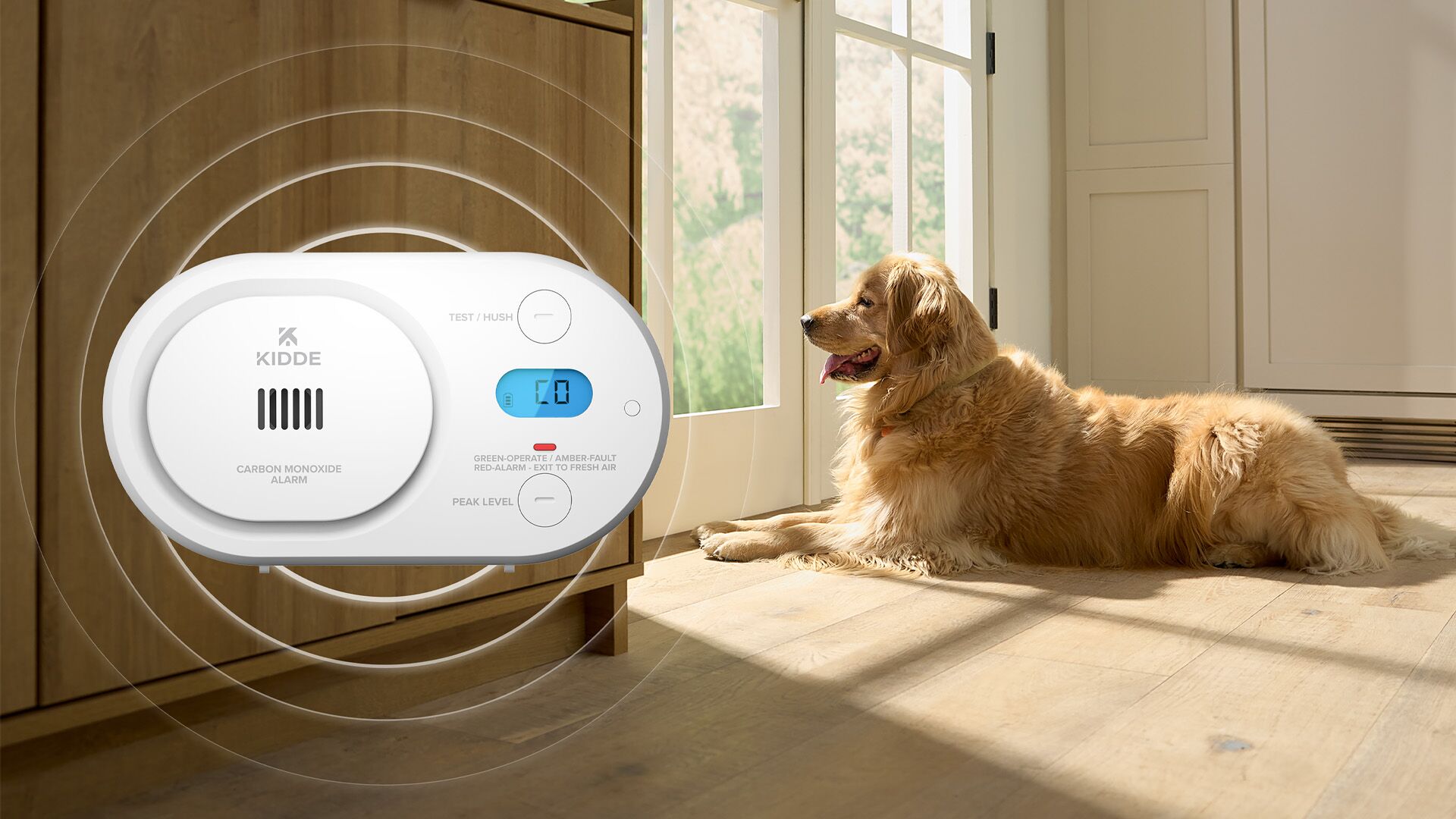
Pets can be affected by carbon monoxide sooner because they’re smaller, breathe faster and have more sensitive respiratory systems. Kidde’s CO alarms with low-level alerts can help you stay a step ahead.

Signs of Carbon Monoxide Poisoning in Pets
The first signs of CO poisoning in pets are typically nausea and vomiting, followed by difficulty breathing. Most symptoms of CO poisoning or carbon monoxide toxicity in pets are nonspecific, meaning they could easily be attributed to other illnesses. It's important to keep working CO alarms throughout the home.
Symptoms:
- Vomiting
- Labored or difficulty breathing
- Sleepiness or lethargy
- Uncoordinated movement
- Disturbances in gait
- Seizures
- Cherry-red gums
- Coughing
- Deafness
- Blindness
Survey Results
According to a February 2026 survey commissioned by Kidde and conducted online by The Harris Poll among 1,423 U.S. pet owners. For more information on carbon monoxide and pet safety, check out our Pet CO Safety Flyer.
This survey was conducted online within the United States by The Harris Poll on behalf of Kidde from February 25-27, 2026, among 1,423 pet owners (i.e., own dogs and/or cats). The sampling precision of Harris online polls is measured by using a Bayesian credible interval. For this study, the sample data is accurate to within +/- 3.3 percentage points using a 95% confidence level. This credible interval will be wider among subsets of the surveyed population of interest. For complete survey methodology, please contact [Stephanie.Berzinski@kgsolutions.com.](mailto: Stephanie.Berzinski@kgsolutions.com.)
Detecting CO in Your Home
The best and simplest way to detect the presence of carbon monoxide in your home is with a CO alarm. The way CO travels is different than smoke, it can travel anywhere in the home - even through drywall!
With most homes, one alarm is not ideal detection. Install CO alarms outside sleeping areas and on every level of your home.
Pay careful attention to rooms where you and your family spend a great deal of time, including living areas, bedrooms and hallways.
IMPORTANT: EVERY ALARM MUST BE REPLACED EVERY 5-10 YEARS.
In addition to testing alarms monthly and replacing batteries (where applicable), check the installation date too. If you have forgotten when they were installed, there's a simple fix: look on the back of the alarm for the manufacturing date.
Plan ahead
Since pets can be affected faster, choosing an alarm with low-level detection can provide earlier awareness of CO. It’s also important keep your veterinarian’s contact information in a place where you and other family members can easily access it, such as your phone contacts or a cloud-based shared file. And ensure your pet's microchip information is current, in case you become separated during an emergency.
Related Products
Related Articles
Choosing a CO Alarm That Works for You
Find one that fits the way you live.
Where Carbon Monoxide Comes From at Home
Everyday appliances and situations that can create CO.
What Causes Carbon Monoxide in the Home? Sources, Risks, and Safety Tips
Sources, Risks, and Safety Tips on Carbon Monoxide in the Home
* Children, elderly adults and pets are more vulnerable to low levels of carbon monoxide and may be affected faster.
** Check User Guide for more information.