Kitchen Fire Safety: How to Prevent Fires and What to Do If One Starts
You’re browning onions when your phone buzzes. You step away to answer it. Two minutes, tops. It feels harmless. But two minutes is all a hot pan of oil needs to go from sizzling to smoking to up in flames.
Cooking is the leading cause of home fires and home fire injuries in the United States.1 Thankfully, kitchen fire safety only takes a few easy habits and knowing what to do if something goes wrong. We’ll walk you through both.
Key Takeaways
Before you turn on a burner, here’s what to know:
- Unattended cooking is the leading factor in kitchen fires. If you leave the kitchen, even for a minute, turn the burner off.
- Keep a lid that fits your pan within reach. Sliding it over a grease fire cuts off the oxygen the flames need.
- Never pour water on a grease fire. For an oven or microwave fire, turn off the heat and keep the door closed.
- Keep a kitchen fire extinguisher or firefighting spray within reach, but away from the stove.
- Only fight a fire that’s small and contained. If it spreads or smoke fills the room, get to safety and call 911.
- Install a working smoke alarm at least 6 feet from cooking appliances and test them monthly.
How Kitchen Fires Start (and Why They’re So Common)
Your stove sees a lot of action. Breakfast, lunch, dinner and the occasional late-night grilled cheese all add up. And every time a burner clicks on, there’s a chance for something to go wrong.
From 2017 to 2021, U.S. fire departments responded to an average of 158,400 home cooking fires a year. Nearly half of all home fires involve cooking equipment. Cooking also ranks as the second leading cause of home fire deaths.2
Most of these fires start the same way. Someone steps away from the stove. The burner keeps heating the pan. Then, the food, fat or grease inside catches fire. Unattended cooking is the leading factor in both cooking fires and cooking fire deaths.1 Fire safety experts explain it with the fire triangle. Every fire needs heat, fuel and oxygen to start and keep burning. Take away any one side and the fire can’t continue.3
Holidays increase that risk. Thanksgiving and the day before are the top two days for home cooking fires in the United States.4 Turns out that more guests, more dishes and more distractions all add up. Whether you’re hosting for 20 or cooking for one, the habits below can help keep the focus on the food.
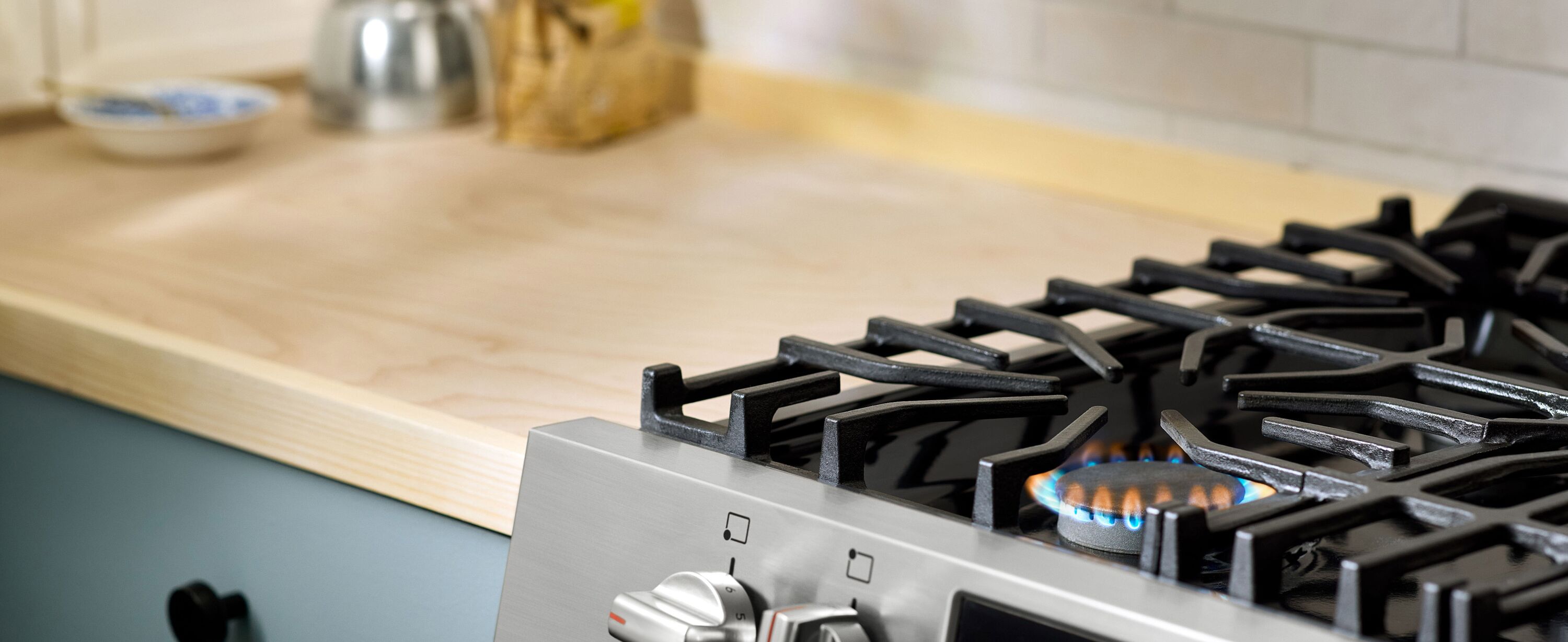
10 Kitchen Fire Prevention Tips for Safer Cooking
Good kitchen fire safety prevention comes down to that fire triangle. Every tip below helps you take away one side of it before a fire gets going.
1. Stand By Your Pan
A knock at the door can pull you away from the stove for longer than you’d expect. If you need to leave the kitchen, even for a minute, turn the burner off first.5 Frying, sautéing and boiling move fast. A pan can go from fine to flaming in the time it takes to sign for a package.
2. Set a Timer for Slow Cooking
Low and slow doesn’t mean out of sight, out of mind. Simmering, baking and roasting give you more breathing room, but they still should command your attention. Stay nearby while food cooks, check on it regularly and set a timer as a reminder just in case.6
3. Watch for Smoke
Fires start when the heat climbs too high. Oil usually gives you a heads-up first by smoking before it bursts into flame. If you see smoke or the grease starts to boil, turn the burner off.5 A slightly late dinner beats a scorched kitchen every time.
4. Turn Pot Handles Toward the Back
Elbows, backpacks and curious toddlers have a way of finding pot handles that stick out over the edge of the stove. Turn handles inward so no one can bump them or pull a pot over.5 It takes one second and can save you a big mess, or worse.
5. Keep a Lid Within Reach
Pull out a lid that fits your pan before the oil heats up and set an oven mitt beside it.6 If the pan catches fire, you can slide the lid on to cut off oxygen. With both already on the counter, you won’t be hunting through a stack of mismatched lids when every second counts.
6. Tidy Up Your Stovetop
Kitchens get cluttered, especially when you’re in the middle of a recipe. But potholders, wooden utensils, dish towels, paper towels, window curtains and food packaging all burn easily. Keep them away from the burners to minimize the risk.6
7. Create a Kid- and Pet-Free Zone
Little helpers are the best. Little helpers underfoot near a hot stove? Not so much. Keep kids and pets at least 3 feet (1 meter) from the stove and cooking areas.4 The same goes for anywhere you carry hot food and drinks.
8. Wipe Away Grease Regularly
Grease and crumbs collect on stovetops and inside ovens little by little over time. Once they heat up, they can flare. And before you know it, last week’s splatter is tonight’s fuel. A quick clean up after you cook helps keep that buildup in check.4
9. Dress for the Stove
Comfy, flowing sleeves and open burners don’t mix. Loose clothing and dangling sleeves can catch fire on a burner before you notice.4 Roll up your sleeves or wear something close-fitting while you cook.
10. Cook When You’re Alert
Late-night cravings are real. So is how slowly you may react when you’re tired. If you’re drowsy or have had a few drinks, save the stovetop for another time.1
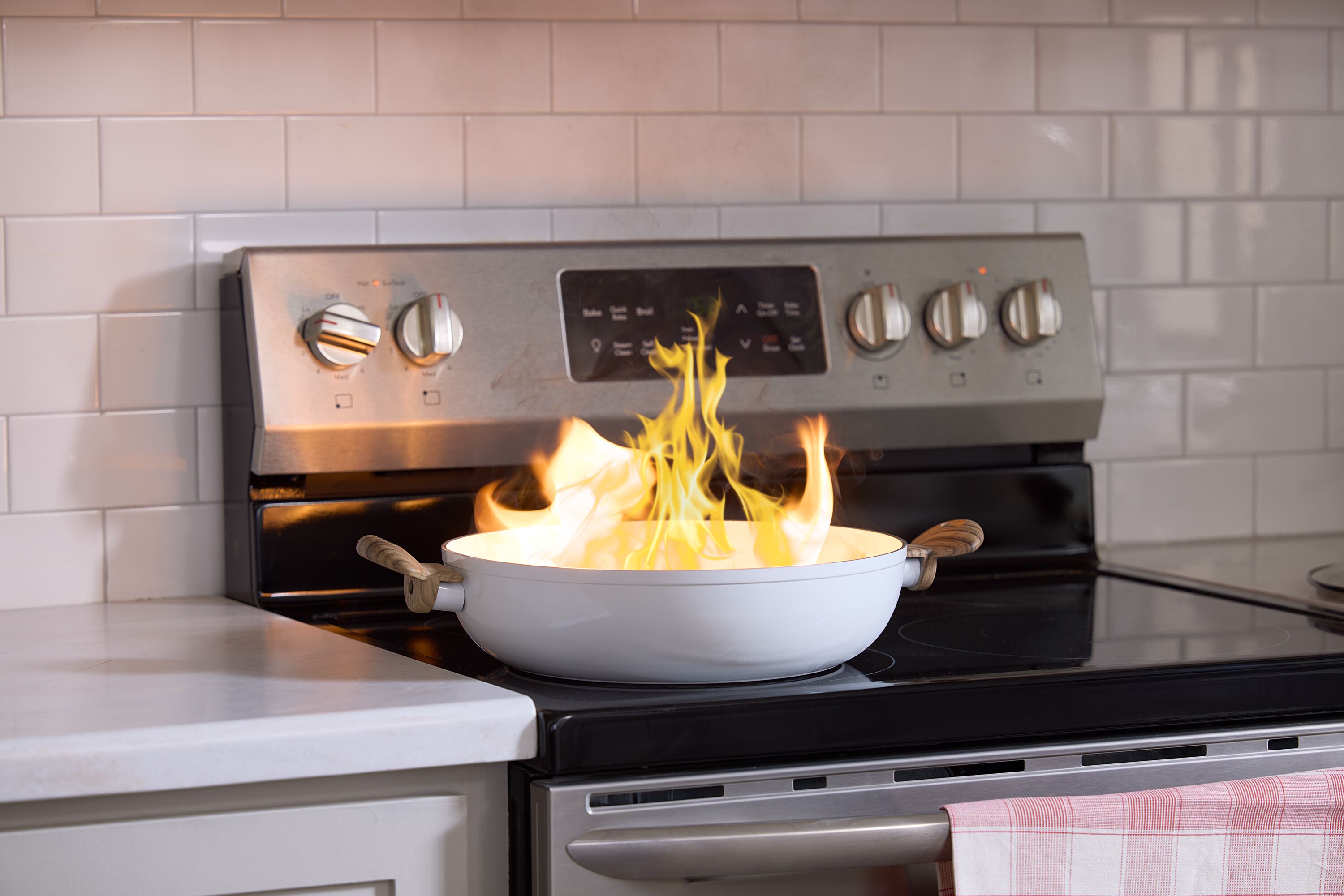
What to Do If a Cooking Fire Starts
Even the most careful cooks can have an off night. If you see flames, stay calm and act fast. A small fire can grow quickly. Decide right away whether it’s one you can safely handle or one you need to get away from. That quick call shapes everything that comes next.
Know When to Get Out
You and your loved ones’ safety comes first, every time. Leave the house and call 911 from outside if you notice any of these signs.6
- The fire has spread beyond the pan, oven or microwave.
- Smoke is filling the room.
- The fire is between you and the door, or it could soon block your way out.
- You aren’t sure you can put it out.
If you’re second guessing things, that’s your answer. Trust your instincts and get everyone out. And once everyone is out, stay out. No pan or phone charger is worth going back in for. The best exit is one you’ve already practiced. Take a few minutes to make and practice a family fire escape plan with two ways out of every room, including the kitchen.
Grease Fire on the Stovetop
This is where the lid you set out before you start cooking earns its spot on the counter. If the flames are small and still contained inside the pan:
- Put on an oven mitt and slide the lid or a baking sheet over the pan.
- Turn off the burner.
- Leave the pan where it is until it has cooled completely.
Resist the temptation to lift the lid and check. Fresh air can restart the fire. And whatever you do, skip the water.6 Water sinks beneath the hot oil and flashes into steam almost instantly, throwing burning grease across the kitchen. Moving the pan is risky, too. One slip is all it takes to spill fire across the floor or onto you.
Oven or Microwave Fire
Appliance fires come with a strong urge to open the door and look, but you should always keep it closed. For an oven, turn off the heat. For a microwave, switch it off and unplug it if you can safely reach the outlet. A closed door will help starve the fire of oxygen and keep the flames contained until they burn out.6 If they don’t, or if smoke starts to escape, it’s time to get out.
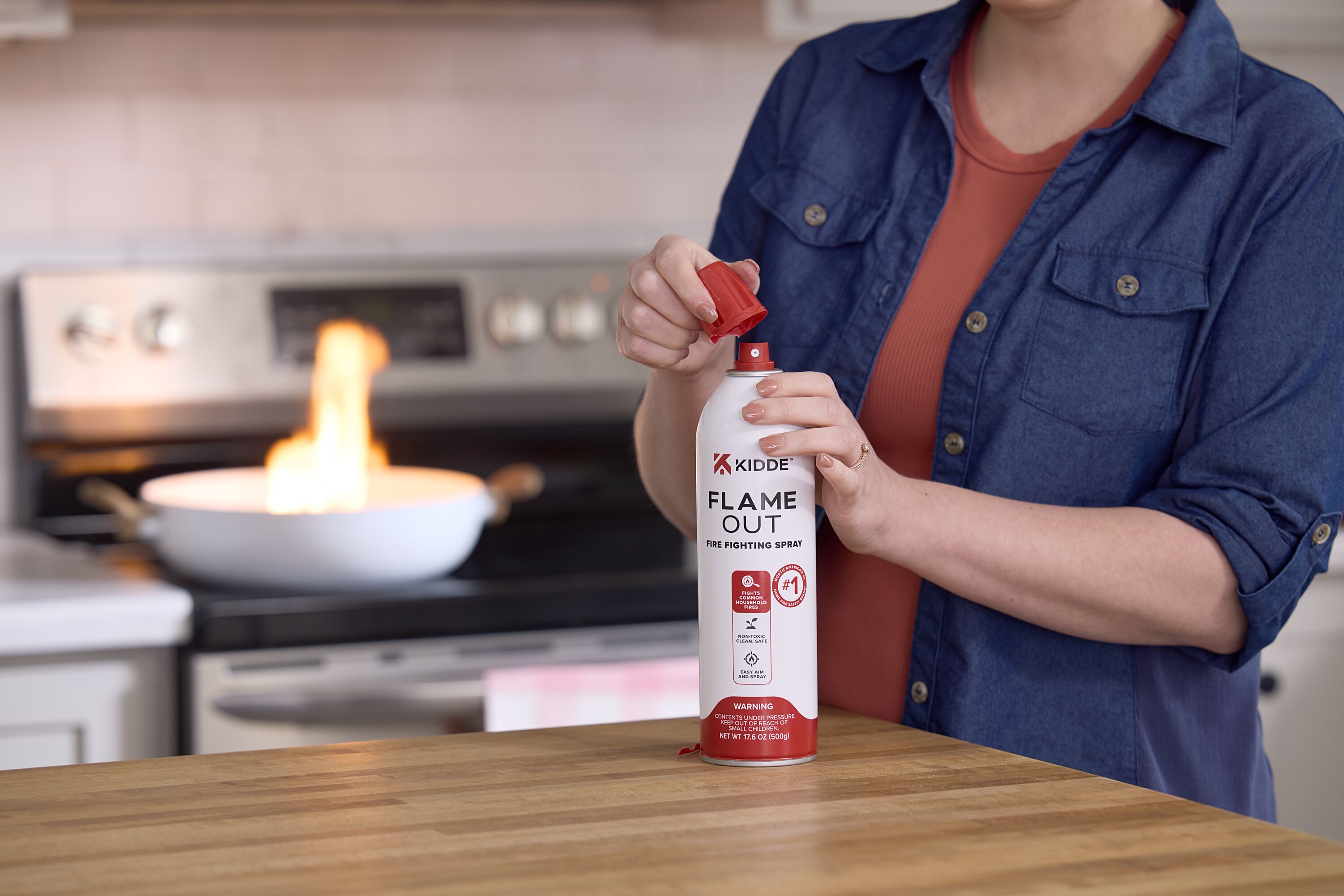
Using a Kitchen Fire Extinguisher or Firefighting Spray
A lid won’t cover every fire. When the flames are still small and contained and you have a clear way out, a fire extinguisher can help you knock them down. Just make sure someone has already called 911 and everyone else is heading outside before you start. Keep the exit at your back the whole time.
Most extinguishers use the PASS method:
- Pull the pin.
- Aim low at the base of the fire.
- Squeeze the lever.
- Sweep from side to side.
A firefighting spray is another easy to use option. With most, you remove the cap, aim at the base of the fire and spray while keeping the can upright. If you’re ever in doubt, the label should clearly list the exact steps.
And speaking of instructions, the best time to read them is today, long before you ever need them. While you’re at it, check the pressure gauge once a month so you know it’s charged and ready. Afterall, a few minutes of prep now can help you act fast and stay steady in case of an emergency.
Kidde Helps You Cook With Confidence
Good habits do most of the heavy lifting when it comes to kitchen fire prevention. The right tools back them up when life gets in the way.
For more than 100 years, families have trusted Kidde to help protect what matters most. We’re experts, sure. But we’re also people who cook, burn the occasional grilled cheese and care about our homes. That’s why we focus on making safety simple enough to fit into everyday life. We live to awaken the protector in everyone. That includes you, every time you step up to the stove to cook for the people you love.
Kitchen Fire Safety FAQs
Related Products
Related Articles
Tiny Habits that Could Turn Into Big Flames
Home is the best thing ever. Nothing beats that feeling of walking in the door, throwing on your comfiest sweats and collapsing on the couch. But on what feels like any old day, those same comforts could quietly spark a fire.
How to Make & Practice a Family Fire Escape Plan
Learn how to create and practice a family fire escape plan, plus use Kidde’s free AR fire safety tool to help your family prepare at home.
A Simple Guide to Choosing a Fire Extinguisher
Different fires need different extinguishers. It may sound technical at first, but the basics are actually simple. Understanding them is one of the easiest ways to know you’re prepared.
1 https://www.nfpa.org/education-and-research/home-fire-safety/cooking
2 https://www.nfpa.org/education-and-research/research/nfpa-research/fire-statistical-reports/home-cooking-fires
3 https://www.osha.gov/sites/default/files/2019-03/fireprotection.pdf
4 https://www.redcross.org/local/florida/south-florida/about-us/news-and-events/news/red-cross-offers-steps-to-help-you-avoid-a-cooking-fire-on-thank.html
5 https://www.usfa.fema.gov/prevention/home-fires/prevent-fires/cooking/
6 https://daytonabeach.gov/1060/Cooking-Safety