Smoke Detector Maintenance: How to Clean, Test and Care for Your Alarms
Most days, your smoke alarms just sit quietly on the ceiling. Then, in the few seconds that matter most, they need to work perfectly. That’s why smoke detector maintenance belongs on your home to-do list.
According to the National Fire Protection Association (NFPA), almost three out of five home fire deaths happen in homes with no smoke alarms or alarms that failed to sound.1 When alarms did fail, power problems like missing or dead batteries were the most common reason.1 Keeping yours ready takes just a few minutes a month.
Why Smoke Detector Maintenance Matters
A smoke alarm can look perfectly fine and still have problems lying underneath. Dust slowly builds up inside the sensing chamber. Batteries drain without much warning. Even the sensor itself loses sensitivity with age, which is why every alarm should be replaced every 5-10 years depending on the model.
Regular maintenance of smoke detectors helps to catch these issues before they turn into gaps in your protection. Cleaning also helps prevent nuisance alarms.
Learning how to maintain smoke alarms comes down to a few easy steps. The first one is a quick cleaning.
How to Clean a Smoke Alarm
Over time, smoke alarms can collect dust, cobwebs, pet hair and even tiny insects. That buildup can keep smoke from reaching the sensor. It can also cause nuisance alarms.
Cleaning takes about five minutes per alarm. Check your user guide first, since some models have their own instructions.
Clear the vents. Gently vacuum the openings with a soft brush attachment, or use short bursts of compressed air.
Wipe the cover. Use a clean, dry cloth on the outside of the alarm. Skip water, sprays and household cleaners, since moisture can get inside.
Test the alarm. Press the test button to confirm everything still works after cleaning.
When to Clean Your Smoke Alarms
Plan to clean your smoke alarms at least twice a year. The easiest way to remember is to tie it to the clock change for daylight saving time.
Keep in mind that some homes need attention more often. Pets shed hair and dander. Renovation projects send fine dust drifting from room to room. Moving day is another good time for cleaning, because shuffling boxes and furniture kicks up a surprising amount of debris.
Many newer Kidde alarms will also let you know when they need cleaning. If yours chirps three times every 60 seconds, it’s time to clear the vents. Older models and other brands may use different patterns, so always check your user guide if you’re unsure.
How to Test a Smoke Alarm
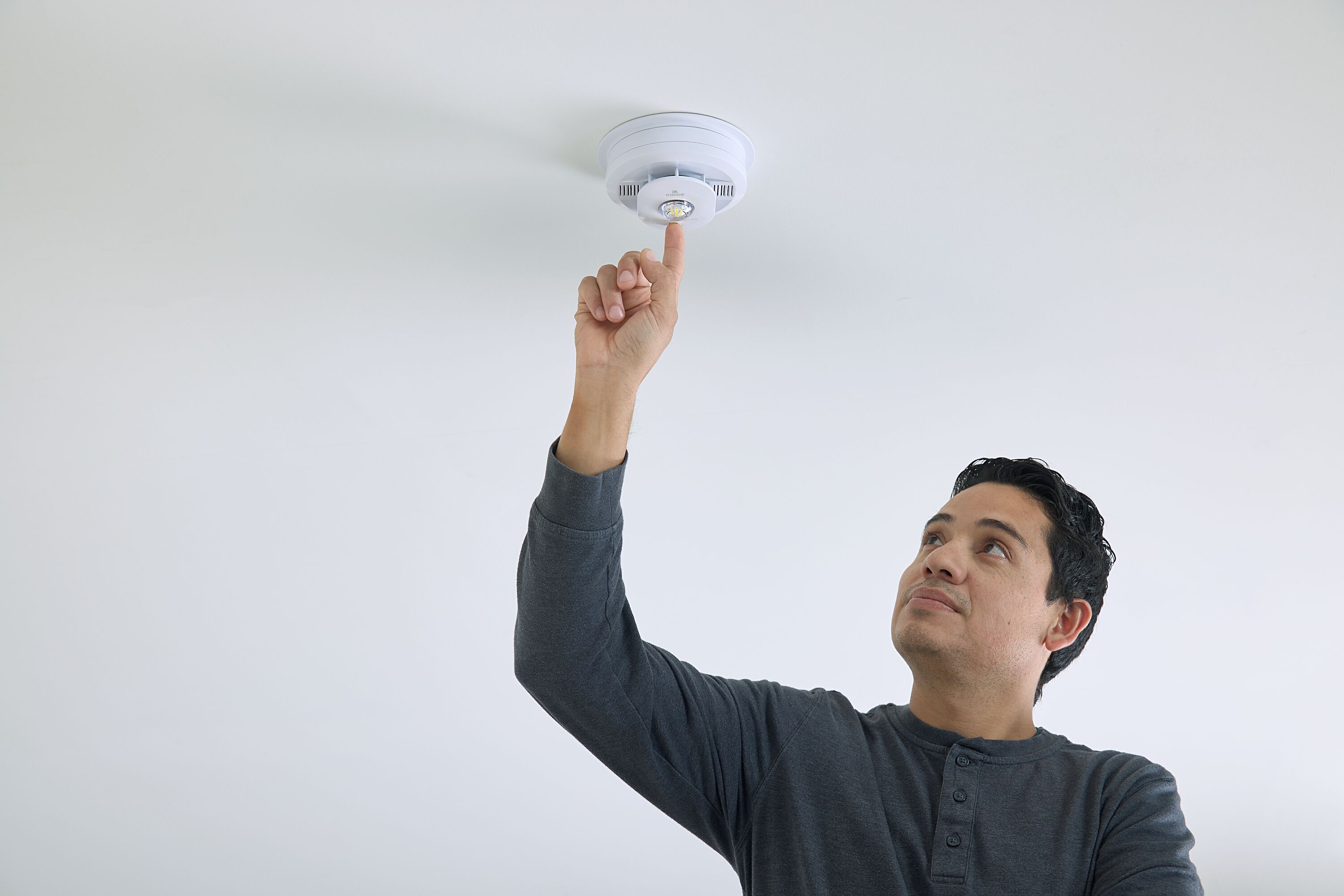
A quick test is the only way to know your alarm’s horn, battery and electronics are working together. It takes about 10 seconds per alarm.
Give yourself some space. Smoke alarms are loud, so step back a few feet or wear ear protection.
Press and hold the test button. Keep holding for a few seconds until the alarm sounds.
Listen closely. A loud, full alarm pattern means it passed. A weak sound or silence means it needs attention.
Stick with the test button rather than a match or a candle. The Red Cross notes that the button checks all of the alarm’s electronic functions and is safer than using a flame.2
How Often to Test
Test every smoke alarm in your home at least once a month.2 Tie it to a date you already remember, like the first of the month or the day a recurring bill is due.
Some newer alarms run automatic self-checks in the background. That’s a helpful extra layer of reassurance. Still, it doesn’t replace a manual push-button test, which lets you hear the alarm for yourself.
What to Do If Your Alarm Doesn’t Sound
A silent test doesn’t always mean a broken alarm. Try these quick fixes first.
- Replace the batteries. For a hardwired alarm, also check that the circuit breaker hasn’t tripped.
- Clean the vents.
- Test it again.
If the alarm stays silent, replace it right away.3

How and When to Replace Smoke Alarm Batteries
Your alarm’s power source determines this step, so start by figuring out which kind you have. If you’re unsure, check the label on the back or look for a battery door.
- Replaceable-battery alarms run on standard batteries, usually 9-volt or AA. Many hardwired alarms also use one as a backup during power outages.
- Sealed 10-year battery alarms have a lithium battery built in for the life of the alarm. You never change it. Once it runs low, you replace the whole unit.
How Often to Change Replaceable Batteries
Plan to swap in fresh batteries at least twice a year, even if the alarm hasn’t chirped for low power. One habit is to change them when you change your clocks for daylight saving time.2 If your area skips the time change, pick two dates that already stick in your mind, like the first day of spring and fall.
Always use the battery type listed on the alarm or in its user guide. A different type may not power the alarm properly.
Signs of a Low Battery
A low battery usually announces itself with a single, recurring chirp. On Kidde smoke alarms, that chirp repeats every 30 to 40 seconds, or every 60 seconds on some models, for at least seven days. Replace the battery as soon as you hear it, then test the alarm.
Not every chirp means a dying battery, though. On Kidde alarms, a chirp between flashes of the red light can signal a malfunction. Chirping for a few minutes after you press Hush is normal too.
When to Replace the Entire Smoke Alarm
Even a well-kept smoke alarm won’t last forever. Its sensor gradually loses sensitivity, no matter how faithfully you clean and test it. Kidde recommends replacing smoke alarms every 5 to 10 years, depending on the model, whether they run on batteries or are hardwired.
To find your alarm’s age, take it down and look for the manufacture date on the back. If you can’t find a date at all, treat that as a sign it’s time for a new one.
Sealed-battery alarms make the timing easier. When a Kidde sealed-battery alarm reaches the end of its life, it chirps every 30 seconds to let you know. Replace it rather than trying to quiet it.
Two other situations call for a new alarm sooner:
- It fails a test even after you’ve replaced the battery and cleaned it.3
- It’s a combination smoke and carbon monoxide alarm with an earlier replacement date. Check the user guide for your model’s timeline.
Make Maintaining Smoke Alarms Easier With Kidde
Maintaining smoke alarms asks for just a few extra minutes each month. Still, the right features can take some of the guesswork off your plate.
Kidde smoke alarms with sealed 10-year batteries never need a battery change. That means no low-battery chirps for the life of the alarm. Alarms with voice alerts can go a step further. Rather than leaving you to decode a beep pattern, they tell you what’s going on.
Whatever alarms you have, the routine stays refreshingly simple. Clean them twice a year, test them monthly and replace them on schedule. A little upkeep now keeps them ready to alert you for years to come.
Smoke Detector Maintenance FAQs
Related Products
Related Articles
What Type of Smoke Alarm Do I Need?
Smoke alarms are one of the simplest ways to protect your home. Learn the type of alarm you need for early fire detection and escape.
What UL Testing Standards Mean for Your Safety
When a product carries a UL or ETL mark that means it’s been put through intense electrical and fire safety testing that simulates real-world emergencies, ensuring your alarm meets the safety and reliability requirements.
Time to Replace Your Alarms
Smoke and carbon monoxide (CO) alarms have an expiration date. Smoke sensors lose sensitivity over time, which means they might not respond as quickly — or sometimes, at all.