What Whole-Home Safety Really Looks Like
A safer home starts one room at a time.
Many people assume they’re covered because they have a smoke alarm. Maybe there’s one outside the bedrooms. Maybe another near the kitchen that occasionally goes off because someone overcooked the bacon. And that’s a good start.
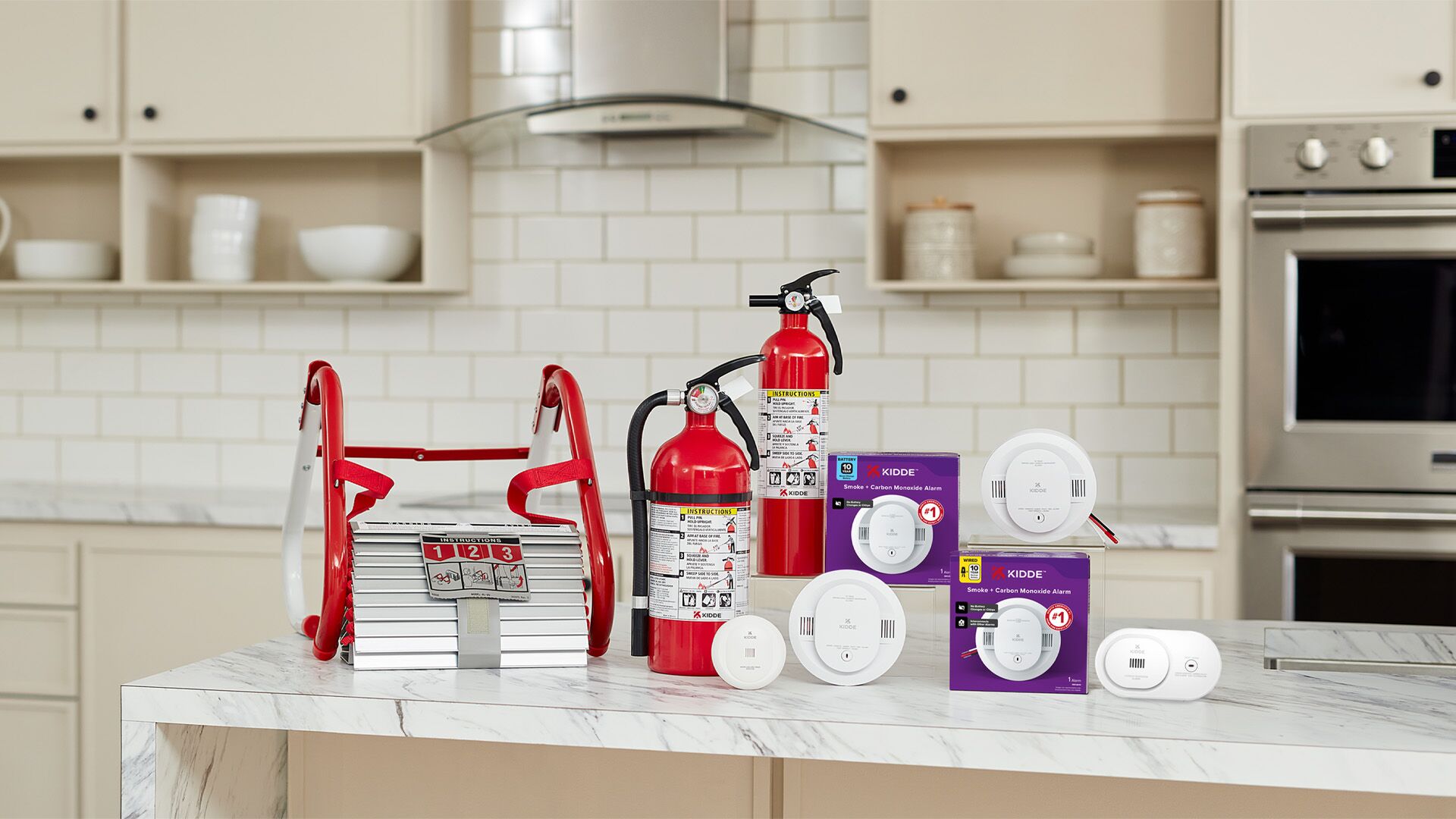
But total home safety looks more like a full team working together throughout the house. From smoke alarms and CO alarms to escape ladders and fire extinguishers. The goal is to help cover the places where everyday problems actually happen.
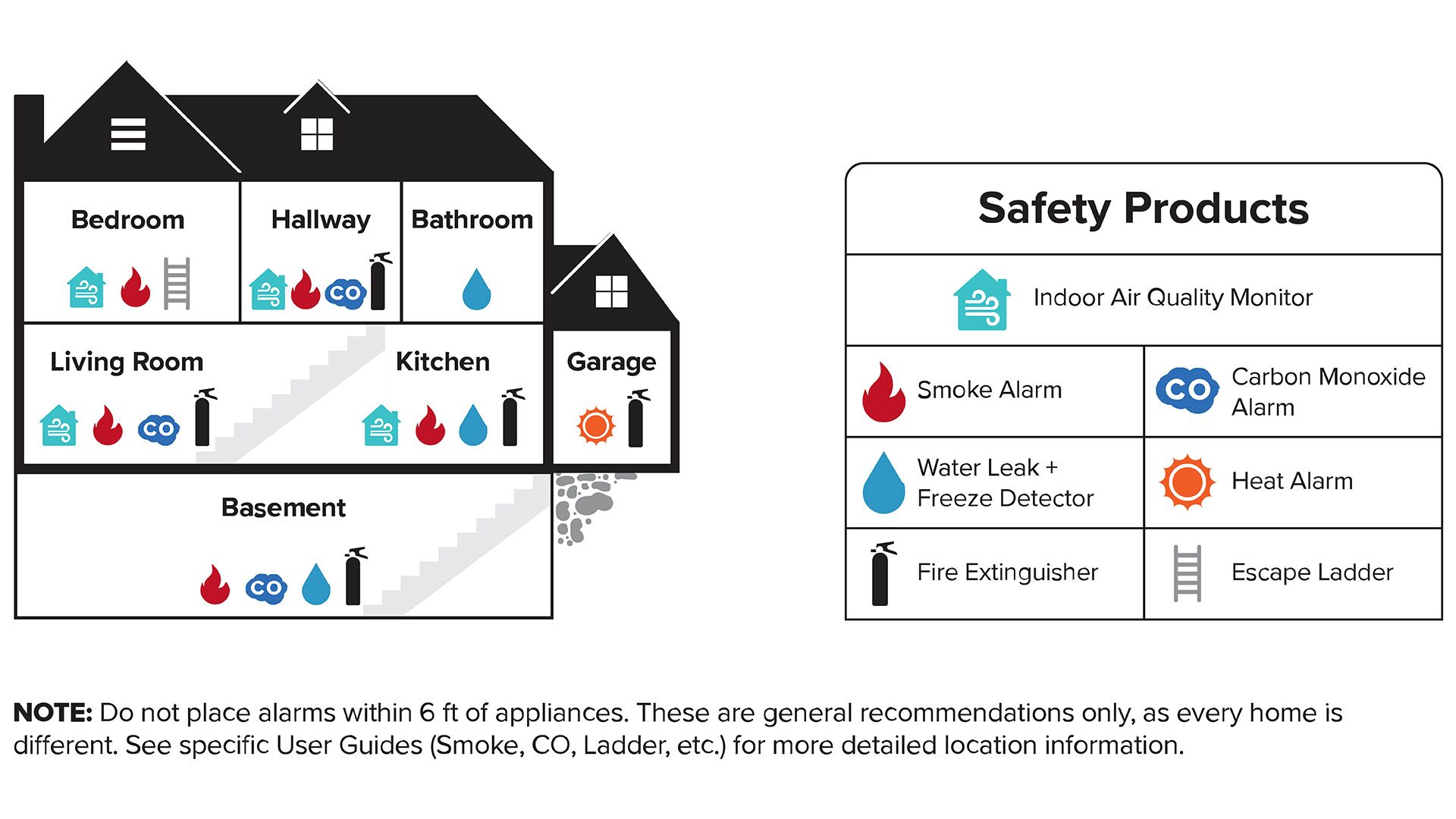
Get The Right Coverage For The Right Rooms1
Every area of your home comes with different safety risks. Let’s walk through the spaces where the right coverage can make a big difference.
Bedrooms
Most deadly home fires happen at night, so this is where fast alerts really matter. Every bedroom should have a smoke alarm, and upper-level bedrooms should also have an escape ladder in case hallways become blocked. Indoor air quality monitors are also a smart addition since they help monitor the air you breathe in while you’re sleeping.
Hallways
They’re the safety hub of the house. They connect everything, which makes them one of the most important zones. Installing smoke alarms and CO alarms, or combination smoke + CO alarms, outside sleeping areas can help give you more time to get to safety. And having an easy-to-grab whole home fire extinguisher can help stop small fires before they spread.
Living Rooms & Family Rooms
This is where life happens. Blankets pile up, binge-fests run late and everyone crashes here afte a long day. It’s also where fireplaces, electronics and heating equipment often live, so you’ll need both smoke alarms and CO alarms, a living area fire extinguisher and an indoor air quality monitor.
Bathrooms
This is a great place for water leak + freeze detectors. Because a small leak behind the toilet or under the sink can become a much bigger headache over time and frozen pipes can cause major issues during the colder months.
Kitchens
Cooking is the #1 cause of home fires2 — which makes the kitchen a key place for fire safety. Install smoke alarms at least 6 ft away appliances to help prevent false alarms. And keep a kitchen fire extinguisher within easy each— but not where you’d have to reach over flames to grab it. Add a CO alarm if there are gas appliances (minimum of 6 ft away) and water leak + freeze detectors under sinks and appliances to help catch leaks before they cause real damage.
Basements
Basements are easy to forget but often packed with potential hazards you rarely think about — from furnaces and water heaters to storage and electrical panels. That’s why basements benefit from layered coverage including smoke alarms, CO alarms, water leak + freeze detectors and a fire extinguisher. Because what happens down there can still affect the whole house.
Garages & Attics
In garages and attics, where smoke alarms may be affected by dust, insects, humidity or temperature swings, heat alarms are a better solution (use only if the product is listed for that environment and allowed by local code). Having a garage fire extinguisher on-hand is a good move too, since things like fuels, empty paint cans, tools and equipment can carry added fire risks.
Knowing Your Home is Covered Just Feels Better
Total home safety means having the right devices in the right places throughout your home — and Kidde makes it easy to find solutions that fit the way you live. And you don’t have to do everything at once. Start with the basics, replace outdated alarms and start adding devices where it matters most. Because a safer home isn’t about perfection — it’s about the peace of mind of knowing you’ve done all you can to help protect your family.

Related Products
Related Articles
Time to Replace Your Alarms
Smoke and carbon monoxide (CO) alarms have an expiration date. Smoke sensors lose sensitivity over time, which means they might not respond as quickly — or sometimes, at all.
Fire Safety Toolkit Essentials: How to Ensure Whole-Home Coverage
A complete fire safety toolkit goes beyond one alarm. Learn how smoke alarms, CO alarms, extinguishers and escape plans work together to protect your home.
What Type of Smoke Alarm Do I Need?
Smoke alarms are one of the simplest ways to protect your home. Learn the type of alarm you need for early fire detection and escape.
1Always refer to your device’s User Guide for official placement guidelines.
2https://www.nfpa.org/education-and-research/home-fire-safety/cooking